



Новости
ПРЕДСТАВЛЯЕМ
ПРЕДСТАВЛЯЕМ
ПРЕДСТАВЛЯЕМ участников
МЕЖДУНАРОДНОГО ФЕСТИВАЛЯ ТЕАТРОВ СТРАН ЕВРОПЫ
ЭСТОНСКИЙ ДРАМАТИЧЕСКИЙ ТЕАТР
(ТАЛЛИНН, ЭСТОНИЯ)
Здание театра немецкой общины города Таллинна было спроектировано в 1910 году двумя архитекторами из Санкт Петербурга — Васильевым и Бубырем. Выполненное в стиле «арт деко», оно поистине украсило центра города: монументальность и изящество сочетались здесь в гармоничном единстве.
В некоторые периоды проводились изменения как интерьеров, так и наружного вида театра. Так, например, в 1939 году, когда здание стало собственностью Эстонского театра драмы, появились идеи перестройки здания, дабы осовременить его, под стать вкусу тридцатых годов, и придать большую функциональность и монументально-представительный вид. К счастью, эти идеи так и остались на бумаге и театр, в общем и целом, сохранил свой исторический облик. Дополнения сделали лишь в 1955 и 1960 годах, когда над актерскими гардеробами возник новый четвёртый этаж и был выстроен малый зал.
В 1980 году произошли фундаментальные изменения. В интерьере был восстановлен прежний, изначальный стиль. Появились орнаменты на потолках и стенах, новый текстиль с геометрическим узором, новая мебель и люстры, выстроили подвальный бар и новые помещения для осветительных и звуковых пультов за партером и ложами яруса.
Если говорить об истории создания театра, то некоторые факты, считавшиеся общепризнанными, на деле оказались весьма сомнительными. Так, например, долгое время годом основания Эстонского театра драмы считался 1916-й. Однако общеизвестно, что коллектив работал в 1920-1924 гг., был создан на основе знаменитого театра «Ванемуйне», и его первым главным режиссером стал Пауль Сепп. Год 1920-й и считает Эстонский театр драмы датой своего основания. Театр пережил разные политические периоды, носил разные названия, но с достоинством выдержал испытание временем, не теряя своей исключительно важной роли в истории эстонской культуры.
Сегодня в труппе 32 актера и 5 режиссеров. Спектакли идут в трех залах, на эстонском языке, но в большом зале осуществляется синхронный перевод на русский. Предпочтение отдается классике, но здесь нередко ставят и пьесы современных авторов, имеющие успех во многих театрах мира. На малой сцене идут камерные спектакли, также она является местом, где могут экспериментировать начинающие режиссеры и авторы.
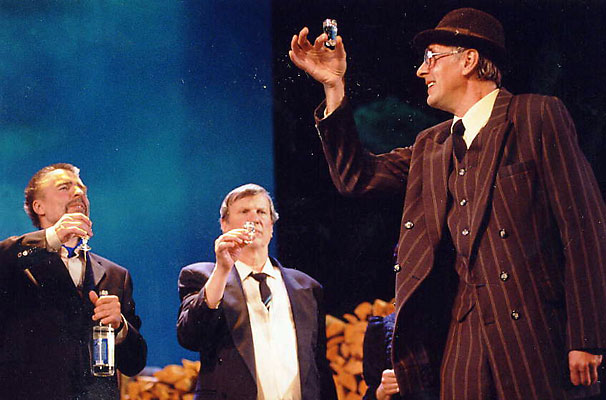
10 ноября — «Поминки по-эстонски» Андрус Кивиряхк
What should be viewed as the moment of birth for a theatre? Is this the first time the bold idea was stated or the first experimental production performed in front of audience or the first working day of an institution?
One significant date for the Estonian Drama Theatre is October 11, 1920 when the students of the private studio first met with their charismatic director Paul Sepp, the man who believed theatre to be a holy temple of art. After a year they established the Drama Studio, the first school in Estonia providing professional theatrical education, and its first class graduating in 1924 formed the Drama Studio Theatre.
True, in 1916-1924 Drama Theatre had been working in Tallinn, but the contemporary Estonian Drama Theatre is still the successor of the theatre established by the young and ambitious disciples of Paul Sepp; their troupe was named the Estonian Drama Theatre in 1937 and in 1939 the theatre bought a beautiful art nouveau building in the centre of Tallinn that had hitherto belonged to the German Theatre Union.
The aimed professional standards of those who started first have been realised in the Estonian Drama Theatre although the times in the previous century have been motley and complicated. High performance standards, sensitivity towards changes affecting society and audience, modern interpretations of classical plays, Estonian dramas — these have been and are still the pillars of the theatre.
The story of Estonia has always inspired men and women at theatre and brought people to watch them: before the war these were the plays by Kitzberg, Vilde and Raudsepp, under Soviet regime those by Rannet, Liives, Smuul, during the years of Khrushchev «thaw» dramas by Kross, Traat, Vetemaa, Saluri, Kruusvall, in liberated Estonia by Koiv, Kivirahk, Karusoo, Ounapuu, Ulman. Each decade has had its own and new dramatic versions of Estonian classics, Tammsaare and Luts.
It has often been so that a good dramatist has had his own director sharing his ideas. Legendary is the team Voldemar Panso — Juhan Smuul; for about two decades Mikk Mikiver has worked together with Jaan Kross; in spring 2000, on the 80th birthday of the Estonian Master of Words, Mikk Mikiver staged his play on the crucial years of 1940s, “Brother Enrico and his Bishop”. In collaboration with Mikk Mikiver Jaan Kruusvall has moved from social subjects to more intimate ones.
The Estonian Drama Theatre is a repertoire theatre: within a season 13 new plays are staged, more than 500 performances are given to more than 100,000 people.
Theatre is born and vanishes almost at the same moment, yet there is something in it that remains. The enthusiasm of the Drama Studio 85 years ago has not been lost although it has developed and changed. The life story of a theatre cannot be easily traced, but the journey never ends like an endless walk on a rainbow, to borrow the enchanting image from the title of a play by our young dramatist and director Andrus Kivirhk.
МЕЖДУНАРОДНОГО ФЕСТИВАЛЯ ТЕАТРОВ СТРАН ЕВРОПЫ
ЭСТОНСКИЙ ДРАМАТИЧЕСКИЙ ТЕАТР
(ТАЛЛИНН, ЭСТОНИЯ)
Здание театра немецкой общины города Таллинна было спроектировано в 1910 году двумя архитекторами из Санкт Петербурга — Васильевым и Бубырем. Выполненное в стиле «арт деко», оно поистине украсило центра города: монументальность и изящество сочетались здесь в гармоничном единстве.
В некоторые периоды проводились изменения как интерьеров, так и наружного вида театра. Так, например, в 1939 году, когда здание стало собственностью Эстонского театра драмы, появились идеи перестройки здания, дабы осовременить его, под стать вкусу тридцатых годов, и придать большую функциональность и монументально-представительный вид. К счастью, эти идеи так и остались на бумаге и театр, в общем и целом, сохранил свой исторический облик. Дополнения сделали лишь в 1955 и 1960 годах, когда над актерскими гардеробами возник новый четвёртый этаж и был выстроен малый зал.
В 1980 году произошли фундаментальные изменения. В интерьере был восстановлен прежний, изначальный стиль. Появились орнаменты на потолках и стенах, новый текстиль с геометрическим узором, новая мебель и люстры, выстроили подвальный бар и новые помещения для осветительных и звуковых пультов за партером и ложами яруса.
Если говорить об истории создания театра, то некоторые факты, считавшиеся общепризнанными, на деле оказались весьма сомнительными. Так, например, долгое время годом основания Эстонского театра драмы считался 1916-й. Однако общеизвестно, что коллектив работал в 1920-1924 гг., был создан на основе знаменитого театра «Ванемуйне», и его первым главным режиссером стал Пауль Сепп. Год 1920-й и считает Эстонский театр драмы датой своего основания. Театр пережил разные политические периоды, носил разные названия, но с достоинством выдержал испытание временем, не теряя своей исключительно важной роли в истории эстонской культуры.
Сегодня в труппе 32 актера и 5 режиссеров. Спектакли идут в трех залах, на эстонском языке, но в большом зале осуществляется синхронный перевод на русский. Предпочтение отдается классике, но здесь нередко ставят и пьесы современных авторов, имеющие успех во многих театрах мира. На малой сцене идут камерные спектакли, также она является местом, где могут экспериментировать начинающие режиссеры и авторы.
10 ноября — «Поминки по-эстонски» Андрус Кивиряхк
What should be viewed as the moment of birth for a theatre? Is this the first time the bold idea was stated or the first experimental production performed in front of audience or the first working day of an institution?
One significant date for the Estonian Drama Theatre is October 11, 1920 when the students of the private studio first met with their charismatic director Paul Sepp, the man who believed theatre to be a holy temple of art. After a year they established the Drama Studio, the first school in Estonia providing professional theatrical education, and its first class graduating in 1924 formed the Drama Studio Theatre.
True, in 1916-1924 Drama Theatre had been working in Tallinn, but the contemporary Estonian Drama Theatre is still the successor of the theatre established by the young and ambitious disciples of Paul Sepp; their troupe was named the Estonian Drama Theatre in 1937 and in 1939 the theatre bought a beautiful art nouveau building in the centre of Tallinn that had hitherto belonged to the German Theatre Union.
The aimed professional standards of those who started first have been realised in the Estonian Drama Theatre although the times in the previous century have been motley and complicated. High performance standards, sensitivity towards changes affecting society and audience, modern interpretations of classical plays, Estonian dramas — these have been and are still the pillars of the theatre.
The story of Estonia has always inspired men and women at theatre and brought people to watch them: before the war these were the plays by Kitzberg, Vilde and Raudsepp, under Soviet regime those by Rannet, Liives, Smuul, during the years of Khrushchev «thaw» dramas by Kross, Traat, Vetemaa, Saluri, Kruusvall, in liberated Estonia by Koiv, Kivirahk, Karusoo, Ounapuu, Ulman. Each decade has had its own and new dramatic versions of Estonian classics, Tammsaare and Luts.
It has often been so that a good dramatist has had his own director sharing his ideas. Legendary is the team Voldemar Panso — Juhan Smuul; for about two decades Mikk Mikiver has worked together with Jaan Kross; in spring 2000, on the 80th birthday of the Estonian Master of Words, Mikk Mikiver staged his play on the crucial years of 1940s, “Brother Enrico and his Bishop”. In collaboration with Mikk Mikiver Jaan Kruusvall has moved from social subjects to more intimate ones.
The Estonian Drama Theatre is a repertoire theatre: within a season 13 new plays are staged, more than 500 performances are given to more than 100,000 people.
Theatre is born and vanishes almost at the same moment, yet there is something in it that remains. The enthusiasm of the Drama Studio 85 years ago has not been lost although it has developed and changed. The life story of a theatre cannot be easily traced, but the journey never ends like an endless walk on a rainbow, to borrow the enchanting image from the title of a play by our young dramatist and director Andrus Kivirhk.
Дата публикации: 16.10.2006
ПРЕДСТАВЛЯЕМ участников
МЕЖДУНАРОДНОГО ФЕСТИВАЛЯ ТЕАТРОВ СТРАН ЕВРОПЫ
ЭСТОНСКИЙ ДРАМАТИЧЕСКИЙ ТЕАТР
(ТАЛЛИНН, ЭСТОНИЯ)
Здание театра немецкой общины города Таллинна было спроектировано в 1910 году двумя архитекторами из Санкт Петербурга — Васильевым и Бубырем. Выполненное в стиле «арт деко», оно поистине украсило центра города: монументальность и изящество сочетались здесь в гармоничном единстве.
В некоторые периоды проводились изменения как интерьеров, так и наружного вида театра. Так, например, в 1939 году, когда здание стало собственностью Эстонского театра драмы, появились идеи перестройки здания, дабы осовременить его, под стать вкусу тридцатых годов, и придать большую функциональность и монументально-представительный вид. К счастью, эти идеи так и остались на бумаге и театр, в общем и целом, сохранил свой исторический облик. Дополнения сделали лишь в 1955 и 1960 годах, когда над актерскими гардеробами возник новый четвёртый этаж и был выстроен малый зал.
В 1980 году произошли фундаментальные изменения. В интерьере был восстановлен прежний, изначальный стиль. Появились орнаменты на потолках и стенах, новый текстиль с геометрическим узором, новая мебель и люстры, выстроили подвальный бар и новые помещения для осветительных и звуковых пультов за партером и ложами яруса.
Если говорить об истории создания театра, то некоторые факты, считавшиеся общепризнанными, на деле оказались весьма сомнительными. Так, например, долгое время годом основания Эстонского театра драмы считался 1916-й. Однако общеизвестно, что коллектив работал в 1920-1924 гг., был создан на основе знаменитого театра «Ванемуйне», и его первым главным режиссером стал Пауль Сепп. Год 1920-й и считает Эстонский театр драмы датой своего основания. Театр пережил разные политические периоды, носил разные названия, но с достоинством выдержал испытание временем, не теряя своей исключительно важной роли в истории эстонской культуры.
Сегодня в труппе 32 актера и 5 режиссеров. Спектакли идут в трех залах, на эстонском языке, но в большом зале осуществляется синхронный перевод на русский. Предпочтение отдается классике, но здесь нередко ставят и пьесы современных авторов, имеющие успех во многих театрах мира. На малой сцене идут камерные спектакли, также она является местом, где могут экспериментировать начинающие режиссеры и авторы.
10 ноября — «Поминки по-эстонски» Андрус Кивиряхк
What should be viewed as the moment of birth for a theatre? Is this the first time the bold idea was stated or the first experimental production performed in front of audience or the first working day of an institution?
One significant date for the Estonian Drama Theatre is October 11, 1920 when the students of the private studio first met with their charismatic director Paul Sepp, the man who believed theatre to be a holy temple of art. After a year they established the Drama Studio, the first school in Estonia providing professional theatrical education, and its first class graduating in 1924 formed the Drama Studio Theatre.
True, in 1916-1924 Drama Theatre had been working in Tallinn, but the contemporary Estonian Drama Theatre is still the successor of the theatre established by the young and ambitious disciples of Paul Sepp; their troupe was named the Estonian Drama Theatre in 1937 and in 1939 the theatre bought a beautiful art nouveau building in the centre of Tallinn that had hitherto belonged to the German Theatre Union.
The aimed professional standards of those who started first have been realised in the Estonian Drama Theatre although the times in the previous century have been motley and complicated. High performance standards, sensitivity towards changes affecting society and audience, modern interpretations of classical plays, Estonian dramas — these have been and are still the pillars of the theatre.
The story of Estonia has always inspired men and women at theatre and brought people to watch them: before the war these were the plays by Kitzberg, Vilde and Raudsepp, under Soviet regime those by Rannet, Liives, Smuul, during the years of Khrushchev «thaw» dramas by Kross, Traat, Vetemaa, Saluri, Kruusvall, in liberated Estonia by Koiv, Kivirahk, Karusoo, Ounapuu, Ulman. Each decade has had its own and new dramatic versions of Estonian classics, Tammsaare and Luts.
It has often been so that a good dramatist has had his own director sharing his ideas. Legendary is the team Voldemar Panso — Juhan Smuul; for about two decades Mikk Mikiver has worked together with Jaan Kross; in spring 2000, on the 80th birthday of the Estonian Master of Words, Mikk Mikiver staged his play on the crucial years of 1940s, “Brother Enrico and his Bishop”. In collaboration with Mikk Mikiver Jaan Kruusvall has moved from social subjects to more intimate ones.
The Estonian Drama Theatre is a repertoire theatre: within a season 13 new plays are staged, more than 500 performances are given to more than 100,000 people.
Theatre is born and vanishes almost at the same moment, yet there is something in it that remains. The enthusiasm of the Drama Studio 85 years ago has not been lost although it has developed and changed. The life story of a theatre cannot be easily traced, but the journey never ends like an endless walk on a rainbow, to borrow the enchanting image from the title of a play by our young dramatist and director Andrus Kivirhk.
МЕЖДУНАРОДНОГО ФЕСТИВАЛЯ ТЕАТРОВ СТРАН ЕВРОПЫ
ЭСТОНСКИЙ ДРАМАТИЧЕСКИЙ ТЕАТР
(ТАЛЛИНН, ЭСТОНИЯ)
Здание театра немецкой общины города Таллинна было спроектировано в 1910 году двумя архитекторами из Санкт Петербурга — Васильевым и Бубырем. Выполненное в стиле «арт деко», оно поистине украсило центра города: монументальность и изящество сочетались здесь в гармоничном единстве.
В некоторые периоды проводились изменения как интерьеров, так и наружного вида театра. Так, например, в 1939 году, когда здание стало собственностью Эстонского театра драмы, появились идеи перестройки здания, дабы осовременить его, под стать вкусу тридцатых годов, и придать большую функциональность и монументально-представительный вид. К счастью, эти идеи так и остались на бумаге и театр, в общем и целом, сохранил свой исторический облик. Дополнения сделали лишь в 1955 и 1960 годах, когда над актерскими гардеробами возник новый четвёртый этаж и был выстроен малый зал.
В 1980 году произошли фундаментальные изменения. В интерьере был восстановлен прежний, изначальный стиль. Появились орнаменты на потолках и стенах, новый текстиль с геометрическим узором, новая мебель и люстры, выстроили подвальный бар и новые помещения для осветительных и звуковых пультов за партером и ложами яруса.
Если говорить об истории создания театра, то некоторые факты, считавшиеся общепризнанными, на деле оказались весьма сомнительными. Так, например, долгое время годом основания Эстонского театра драмы считался 1916-й. Однако общеизвестно, что коллектив работал в 1920-1924 гг., был создан на основе знаменитого театра «Ванемуйне», и его первым главным режиссером стал Пауль Сепп. Год 1920-й и считает Эстонский театр драмы датой своего основания. Театр пережил разные политические периоды, носил разные названия, но с достоинством выдержал испытание временем, не теряя своей исключительно важной роли в истории эстонской культуры.
Сегодня в труппе 32 актера и 5 режиссеров. Спектакли идут в трех залах, на эстонском языке, но в большом зале осуществляется синхронный перевод на русский. Предпочтение отдается классике, но здесь нередко ставят и пьесы современных авторов, имеющие успех во многих театрах мира. На малой сцене идут камерные спектакли, также она является местом, где могут экспериментировать начинающие режиссеры и авторы.
10 ноября — «Поминки по-эстонски» Андрус Кивиряхк
What should be viewed as the moment of birth for a theatre? Is this the first time the bold idea was stated or the first experimental production performed in front of audience or the first working day of an institution?
One significant date for the Estonian Drama Theatre is October 11, 1920 when the students of the private studio first met with their charismatic director Paul Sepp, the man who believed theatre to be a holy temple of art. After a year they established the Drama Studio, the first school in Estonia providing professional theatrical education, and its first class graduating in 1924 formed the Drama Studio Theatre.
True, in 1916-1924 Drama Theatre had been working in Tallinn, but the contemporary Estonian Drama Theatre is still the successor of the theatre established by the young and ambitious disciples of Paul Sepp; their troupe was named the Estonian Drama Theatre in 1937 and in 1939 the theatre bought a beautiful art nouveau building in the centre of Tallinn that had hitherto belonged to the German Theatre Union.
The aimed professional standards of those who started first have been realised in the Estonian Drama Theatre although the times in the previous century have been motley and complicated. High performance standards, sensitivity towards changes affecting society and audience, modern interpretations of classical plays, Estonian dramas — these have been and are still the pillars of the theatre.
The story of Estonia has always inspired men and women at theatre and brought people to watch them: before the war these were the plays by Kitzberg, Vilde and Raudsepp, under Soviet regime those by Rannet, Liives, Smuul, during the years of Khrushchev «thaw» dramas by Kross, Traat, Vetemaa, Saluri, Kruusvall, in liberated Estonia by Koiv, Kivirahk, Karusoo, Ounapuu, Ulman. Each decade has had its own and new dramatic versions of Estonian classics, Tammsaare and Luts.
It has often been so that a good dramatist has had his own director sharing his ideas. Legendary is the team Voldemar Panso — Juhan Smuul; for about two decades Mikk Mikiver has worked together with Jaan Kross; in spring 2000, on the 80th birthday of the Estonian Master of Words, Mikk Mikiver staged his play on the crucial years of 1940s, “Brother Enrico and his Bishop”. In collaboration with Mikk Mikiver Jaan Kruusvall has moved from social subjects to more intimate ones.
The Estonian Drama Theatre is a repertoire theatre: within a season 13 new plays are staged, more than 500 performances are given to more than 100,000 people.
Theatre is born and vanishes almost at the same moment, yet there is something in it that remains. The enthusiasm of the Drama Studio 85 years ago has not been lost although it has developed and changed. The life story of a theatre cannot be easily traced, but the journey never ends like an endless walk on a rainbow, to borrow the enchanting image from the title of a play by our young dramatist and director Andrus Kivirhk.
Дата публикации: 16.10.2006
Главный режиссёр Малого театра —
заслуженный артист России А.В. Дубровский
Партнеры


Информационная поддержка












Оценка качества услуг учреждений культуры


